The kakeibo method: Japan's way to budget and save
Kakeibo was invented over a century ago. It works for the same reason it did then: writing down a purchase means noticing it.
In short
Kakeibo is a Japanese budgeting method introduced in 1904 by the journalist Hani Motoko. Spending is written down by hand and split into four categories: needs, wants, culture and unexpected. At the start of each month you answer four questions — how much do I have, how much do I want to save, how much will I spend, what can I improve — and at the end of the month you review the results.
Kakeibo (家計簿) means «household account book». It was created by Hani Motoko, Japan's first woman journalist, for the housewives who ran family money. The method needs no spreadsheets and no apps — only the habit of writing things down and thinking.
The four categories
Needs
Housing, food, phone, transport
What you cannot do without
Wants
Eating out, shopping, fun
You could live without it
Culture
Books, museums, courses
What helps you grow
Unexpected
Repairs, doctor, gifts
What was not planned
Four categories instead of twenty is the method's strength: there is no choosing when recording, and the month's results read in a minute.
The four questions at the start of the month
- How much money do I have?
- How much do I want to save?
- How much will I spend?
- What can I improve?
The answers are written before the first purchase. The savings target is set first, and everything else is planned around it.
Writing by hand
Every purchase is recorded the same day, with the amount and category. The point is not accounting but attention: writing by hand makes you pause for a second and ask whether it was needed. Many people add more questions before buying: can I live without this, can I afford it, will I use it?
The month's review
At the end of the month you compare plan and reality: how much you saved, which category ran over, what to do differently. The answer to next month's fourth question comes from here. A similar ritual without a notebook: monthly money review.
Kakeibo without a notebook
Paper is not the goal of the method but a way of slowing down. If the notebook does not stick, the essence can stay: record straight away rather than importing from the bank, keep few categories, and answer the four questions at the start of each month.
How it looks in the app
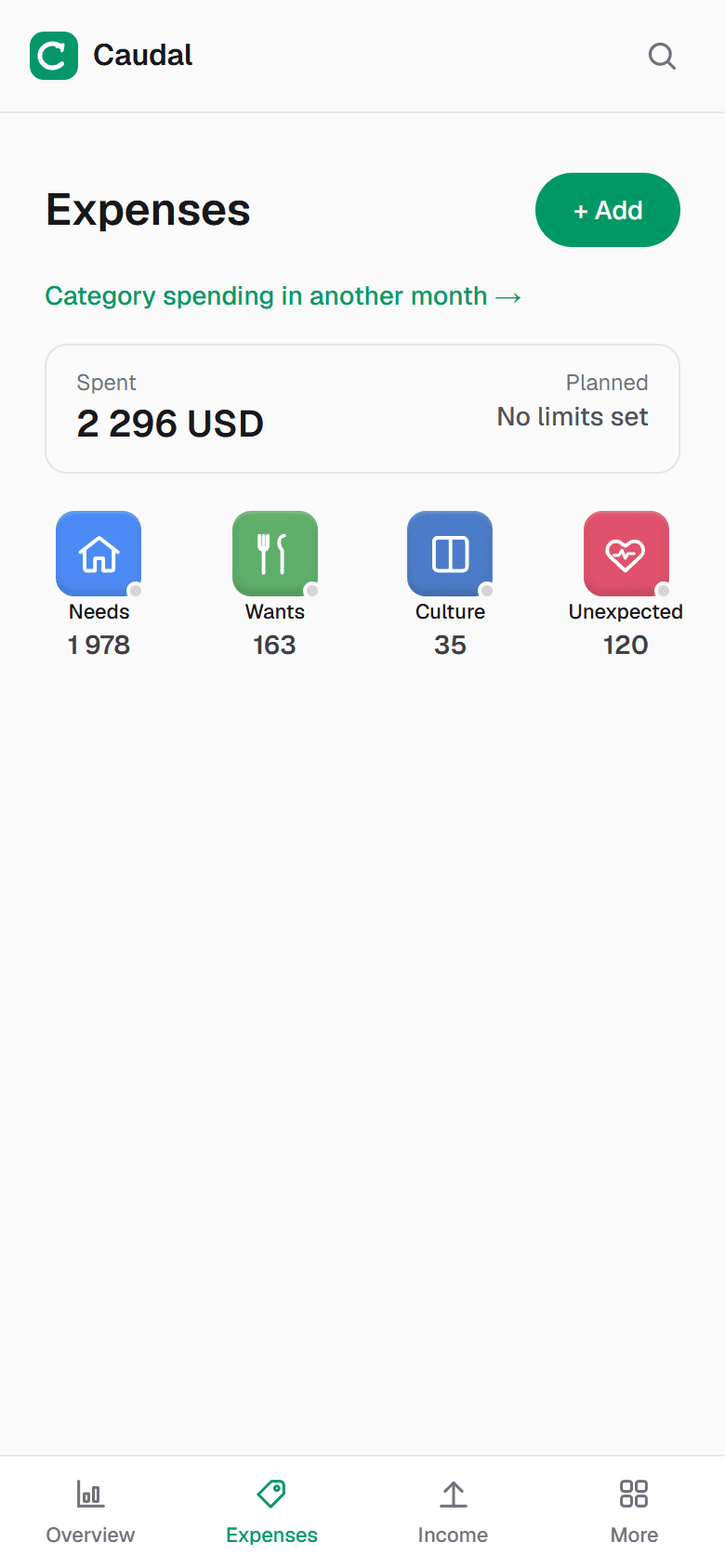
In Caudal spending is recorded by hand — in two taps or by voice, with no bank connection — so the kakeibo effect survives: you notice every purchase. You can keep just the four kakeibo categories or mark your own as essential and non-essential, and the month's savings target goes under «Goals». The end-of-month report shows where the money went and answers the fourth question for you. Why recording by hand beats automatic imports: expense app without bank connection.
Common questions
- What is kakeibo?
- A Japanese budgeting method introduced by the journalist Hani Motoko in 1904. Spending is written down by hand in four categories — needs, wants, culture and unexpected — and a savings target is set at the start of each month.
- What are the four kakeibo questions?
- How much money do I have, how much do I want to save, how much will I spend, and what can I improve? The first three are answered at the start of the month; the answer to the fourth comes from the review at the end.
- Can you do kakeibo in an app?
- Yes, if you keep the essence: record spending by hand right after buying, keep few categories and set a savings target at the start of the month. Automatic bank imports remove the method's main effect — the moment of attention.
Try it on your own money
Caudal is an expense tracker in Spanish, English and Russian. Several currencies, goals, debts, a shared household budget. Recording an expense takes three seconds.
Start free