What to do with your first paycheck
Habits started with the first paycheck last for years. The bad ones too.
In short
With your first paycheck, do three things: spend a small part on a treat or a gift for family, put at least ten percent into a separate account straight away, and write down what arrived and where the rest will go. Do not let spending rise to the size of the whole paycheck: the gap between what you earn and what you spend is the best gift you can give yourself at the start of a career.
The first paycheck is when money is yours and only yours. That month's decisions look small, but they set the level of spending that is hard to step back from later.
First, what actually arrived
The salary in the contract and the money in your account differ: tax and deductions come off before it is paid. The first paycheck sometimes covers less than a full month, or arrives in two halves. Write down what really arrived and when to expect the next.
How to split it
A treat
A small share
For yourself or a gift for family
Saving
At least 10 percent
To a separate account, at once
Living until the next
The rest
Food, transport, housing, phone
A gift for your parents from your first paycheck is a good tradition: it is about gratitude, not the amount. What matters is that the treat is a planned share, not the whole paycheck.
An emergency fund from the first paycheck
The first goal is an emergency fund of at least one month's costs, then three. In a new job it matters even more: a probation period does not always end the way you hope. More in emergency fund.
The lifestyle creep trap
A paycheck brings temptation: a nicer place, a phone on instalments, rides instead of the bus. Each cost is affordable alone, together they eat the whole income, and with every raise the story repeats. The defence: let spending rise more slowly than income, and split every raise in half — half for living, half to savings.
Credit cards and instalments
The first paycheck is a common excuse for the first instalment plan or credit card. If you can wait, wait at least until you have a fund. If you get one, do it knowing how the grace period works: using a credit card without debt.
How it looks in the app
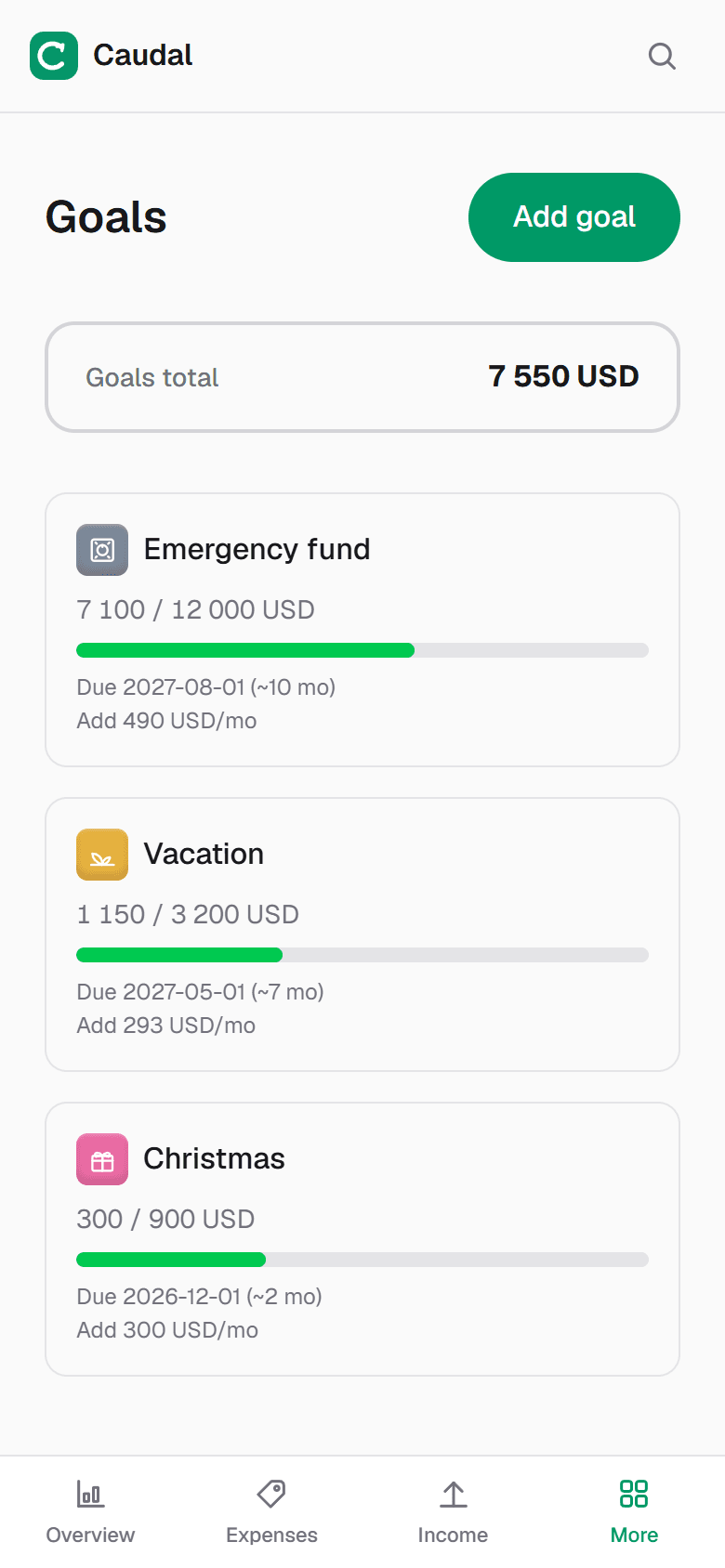
In Caudal the paycheck is recorded as income and saving is a goal contribution: the app works out how much to set aside each month and takes it off what you can spend today. Start tracking from the first paycheck and within a couple of months you see what your life costs and how much of each raise goes on spending. How to organise payday itself: what to do on payday.
Common questions
- What do people usually do with their first paycheck?
- Often they buy a gift for their parents or a treat to remember it by. That is a good tradition if a small share goes on it rather than the whole paycheck. The rest is best split between saving and living until the next payday.
- How much of my first paycheck should I save?
- At least ten percent, on the day it arrives, into a separate account. The amount matters less than the habit, and the first paycheck is the easiest time to start one, because your spending level has not set yet.
- Should I get a credit card with my first paycheck?
- Better to build a fund of at least one month's costs first. If you need a card, use it only within the grace period and pay the full balance, not the minimum.
Try it on your own money
Caudal is an expense tracker in Spanish, English and Russian. Several currencies, goals, debts, a shared household budget. Recording an expense takes three seconds.
Start free