How to spend less money without living on a diet
Spending less is not about giving up everything. It is about no longer paying for what you do not need.
In short
To spend less, start with the big items: housing, transport, loans, phone and subscriptions save more than skipping coffee. Then groceries: a list, a weekly menu and cooking at home. For small spending, simple rules work: wait a day before buying, set a limit per category and record every purchase. Most important, the money you stop spending needs a goal, or it simply gets spent on something else.
Spending less does not start with giving something up. It starts with a question: what am I paying for, and do I need it? Most of the time the big money is not leaving where people look for it.
Start with the big items
Housing
Rent, utilities
One decision, savings every month
Loans
Interest
Refinancing, extra payments
Transport
Car, ride apps
Often the second-biggest cost
Phone and subscriptions
Plans, services
Checked in one evening
Switching a plan or cancelling three subscriptions saves as much as a month without coffee — and it needs no willpower every day. How much you spend on subscriptions. If you have an expensive loan, check whether refinancing is worth it.
Then groceries
The most flexible of the big costs. Three things work: a shopping list, a weekly menu and cooking instead of ordering in. A shop without a list is the main source of overspending. How much to spend on groceries.
Rules for small spending
- Wait a day. Anything you do not need today waits until tomorrow. Half of the urges pass overnight: impulse buying.
- A limit per category. An amount for eating out or clothes per month, and you can see what is left.
- Record every purchase. What goes unrecorded adds up to a noticeable sum by the end of the month: small daily spending.
What not to cut
Health, your emergency fund and things you use every day. Cheap shoes replaced every season cost more than good ones.
Savings need a goal
Money you stop spending that just stays on the card ends up spent on something else. Move it straight away — to the emergency fund, a goal or an extra loan payment. Then the saving is visible and easier to keep going. How to save money.
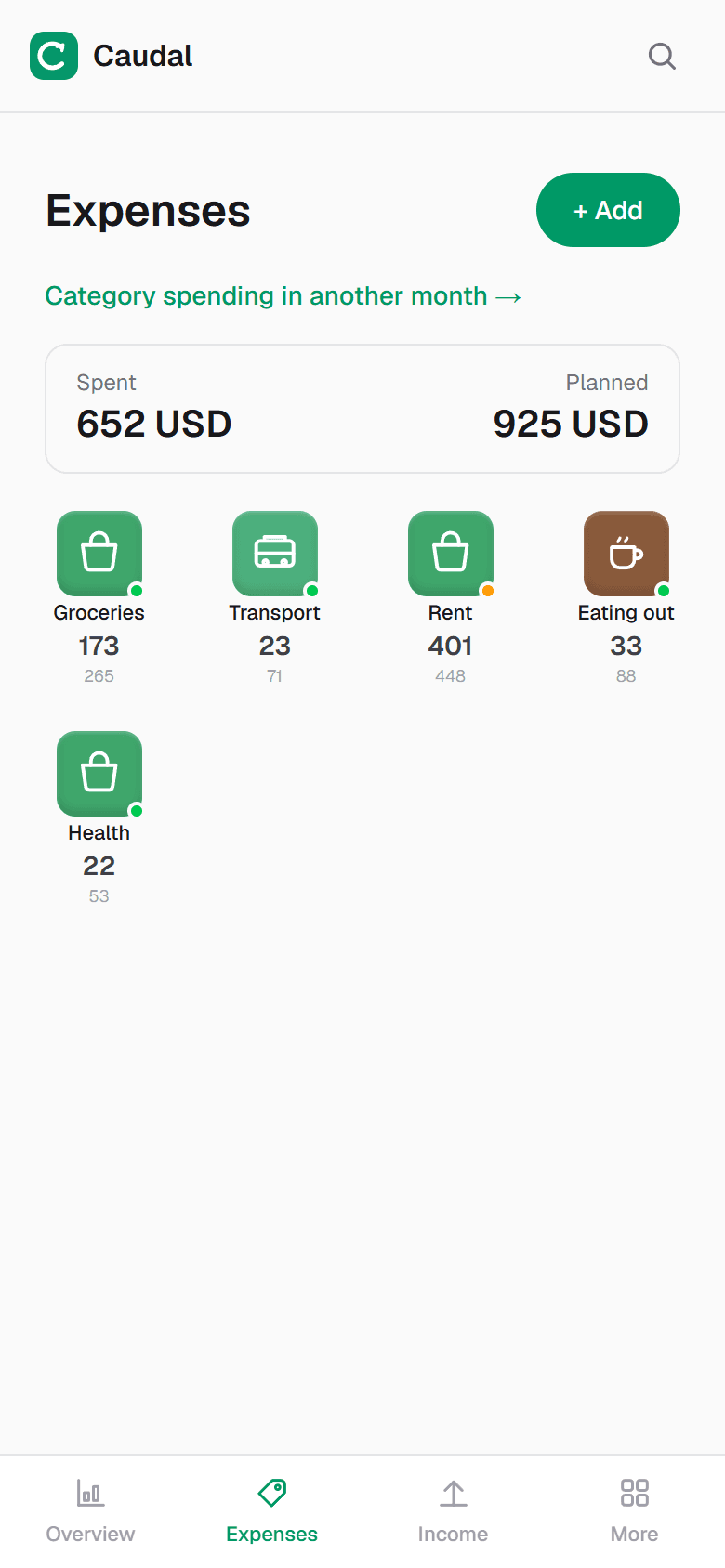
How it looks in the app
In Caudal the category report shows where the money goes and where cutting back will pay off most. Subscriptions sit in Recurring with their monthly and yearly cost, and each category can have a monthly limit — the app warns you as it runs low. Whatever you save can go straight to a goal: the contribution recalculates when you will reach it.
Common questions
- Where do I start if I want to spend less?
- With the big items: housing, loans, transport, phone and subscriptions. One decision there saves money every month without daily effort. Then groceries: a list, a weekly menu and cooking at home.
- How do I stop spending money on things I do not need?
- Wait a day before any purchase that is not urgent, put a monthly limit on the categories where most of it goes, and record every purchase. Seeing the real monthly figure curbs spending better than any resolution.
- How can I spend less on a low income?
- Focus on groceries, phone and subscriptions, where you can cut without losing quality of life, and set aside even a small fixed amount. If income does not cover the essentials, cutting back is not enough — income has to rise.
Try it on your own money
Caudal is an expense tracker in Spanish, English and Russian. Several currencies, goals, debts, a shared household budget. Recording an expense takes three seconds.
Start free