How much to spend on groceries, and how to spend less
Food is the largest category in most budgets and the worst remembered.
In short
Food takes twenty to thirty-five percent of household spending, and the lower the income the higher the share. To find yours, count groceries and eating out separately for a month: the second is almost always bigger than it feels, and that is where the slack is. The bill comes down through two or three repeating decisions, not by buying worse.
If there is one category where measuring pays for itself immediately, this is it. Large, daily, and almost nobody remembers it correctly: memory keeps the big Saturday shop and deletes the four weekday ones.
What it usually comes to
20–35%
Of household spending
The usual range; lower income, higher share
2 lines
Groceries and eating out
Always separate: two different decisions
4 trips
The ones nobody recalls
Weekdays, and together they beat Saturday
A high share does not mean you are spending badly. It means there is slack here, which is a different thing and a far more useful one.
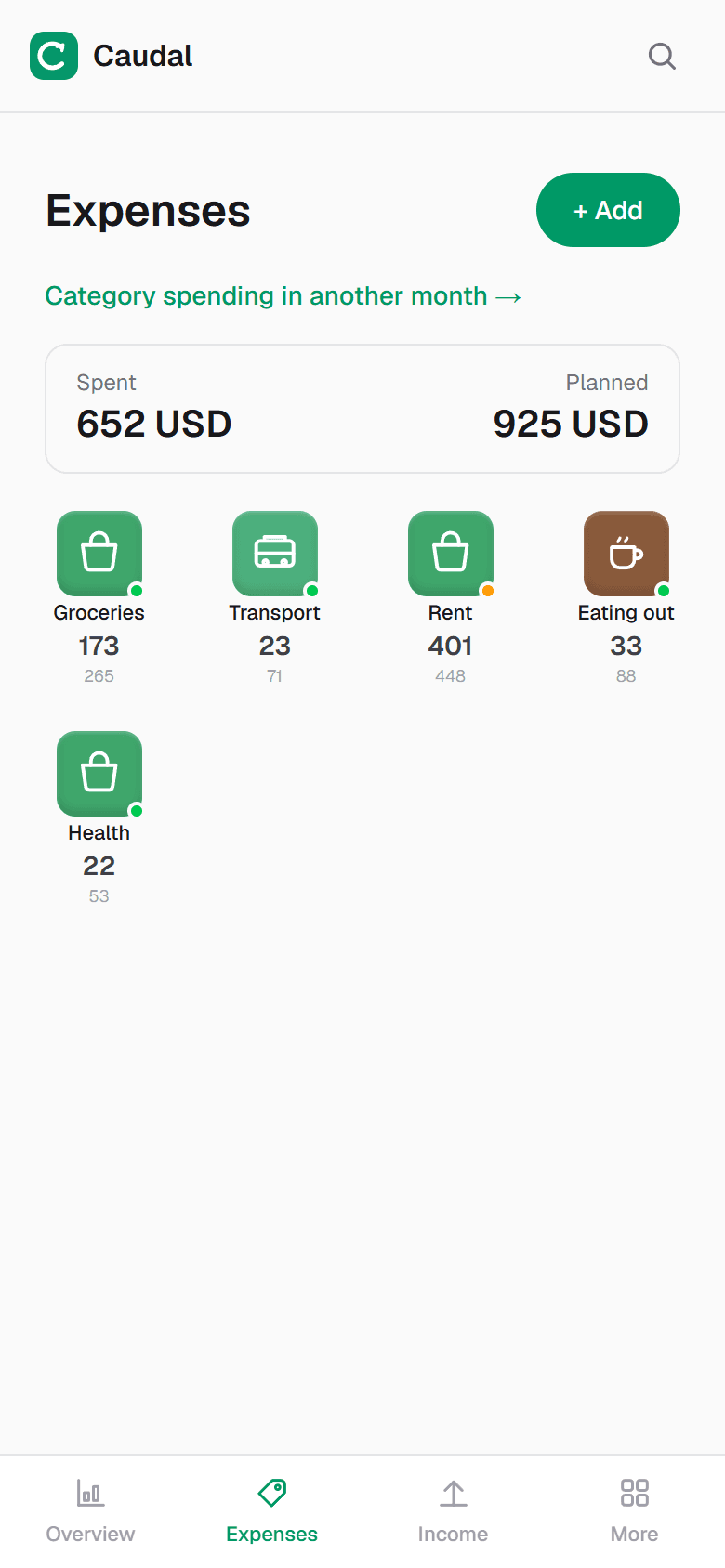
Split it in two, always
Groceries and eating out are not one category, even though both are food.
The first is provisioning: decided once a week and reduced by planning. The second is a run of small decisions made hungry and in a hurry, and it is reduced by something else — changing what happens by default, not by willpower.
In a single line the first hides the second, and you cannot tell what you are looking at.
What actually brings the bill down
No magazine advice. Three things, in descending order of effect:
- Weekday meals out. Almost always where the money is, and almost always underestimated by half. Turning four times a week into two is a large change that survives to the third month; turning it into zero is abandoned in the second week.
- A list, and not while hungry. It sounds obvious and remains the best advice there is by effort-to-result. A list with rough prices, written before leaving, cuts out what you had no intention of buying.
- One big shop and one short one. A weekly run for the heavy things and a mid-week top-up for fresh ones. Three or four unplanned visits cost more than two planned ones: every entry into a shop produces something that was not on the list.
What does not work
Bulk discounts on things you were not going to buy. Saving forty percent on something unnecessary is spending sixty.
And switching every brand at once. What holds is switching three or four where the price difference is noticeable and the taste difference is not — not rebuilding the whole shelf, which lasts a fortnight.
How to tell it is going well
Not by the month's total — that swings with the number of trips and with prices. By the share of income food took, compared with previous months: a share survives inflation and a total does not. Why, in budgeting when prices keep rising.
Common questions
- What share of income on food is normal?
- Twenty to thirty-five percent of household spending, and the lower the income the higher the share. Comparing yourself against another country's average is close to useless: the spread within one country is wider than the gap between countries.
- Do cafés and delivery count as food?
- They do, on their own line. They are two different decisions: one made weekly with a list, the other made hungry and in a hurry, and only separated can you see which one is growing.
- How do I spend less without eating worse?
- Start with weekday meals out — that is usually where the money is — and shop with a list. Switching brands helps only where the price gap is noticeable and the taste gap is not; switching all of them at once is a fortnight's plan.
Try it on your own money
Caudal is an expense tracker in Spanish, English and Russian. Several currencies, goals, debts, a shared household budget. Recording an expense takes three seconds.
Start free