How to lower your electric bill at home
Light bulbs are not what drives your electric bill. Two or three appliances that run for hours are.
In short
To lower your electric bill, start with the appliances that use the most: heating and air conditioning, the water heater, the dryer and an old refrigerator usually make up most of it. Set the thermostat to 78°F in summer and 68°F in winter when you are home, wash in cold water and line-dry when you can, keep the fridge sealed and away from heat, and unplug devices on standby. If your utility has time-of-use rates, moving heavy use to off-peak hours lowers the bill further.
Most tips for saving electricity are about light bulbs. They help, a little. What really moves the bill is anything that heats, cools or runs all day.
What uses the most
High
Heating and air conditioning
The largest share in most homes
High
Electric water heater
Every hot shower and hot wash
High
Dryer and old refrigerator
One by the load, the other all day
Medium
Oven, dishwasher, space heaters
In bursts, but heavy
Low
LED bulbs, chargers, TV
They add up, but are not the problem
Changes you will notice
- Thermostat at 78°F in summer and 68°F in winter when home, higher or lower when away. A smart or programmable thermostat does it for you. Change the filters.
- Water heater at 120°F, and cold water for laundry.
- Line-dry when you can, and clean the dryer's lint filter every load.
- Refrigerator away from the stove and sun, with a tight door seal. A model over fifteen years old can pay for its replacement in savings.
- Unplug what sits on standby: game consoles, set-top boxes, chargers.
When you use power matters
Many utilities offer time-of-use rates: electricity costs more in the late afternoon and evening peak and less at night. Running the dishwasher, laundry and car charging off-peak lowers the bill without using any less. Check your plan on the utility's website; some also offer budget billing to even out seasonal swings.
How much you can save
It depends on your home and climate, but in homes with central air or electric heat, the thermostat alone usually saves more than everything else combined. Measure your own case: note the bill before and after the changes.
How it looks in the app
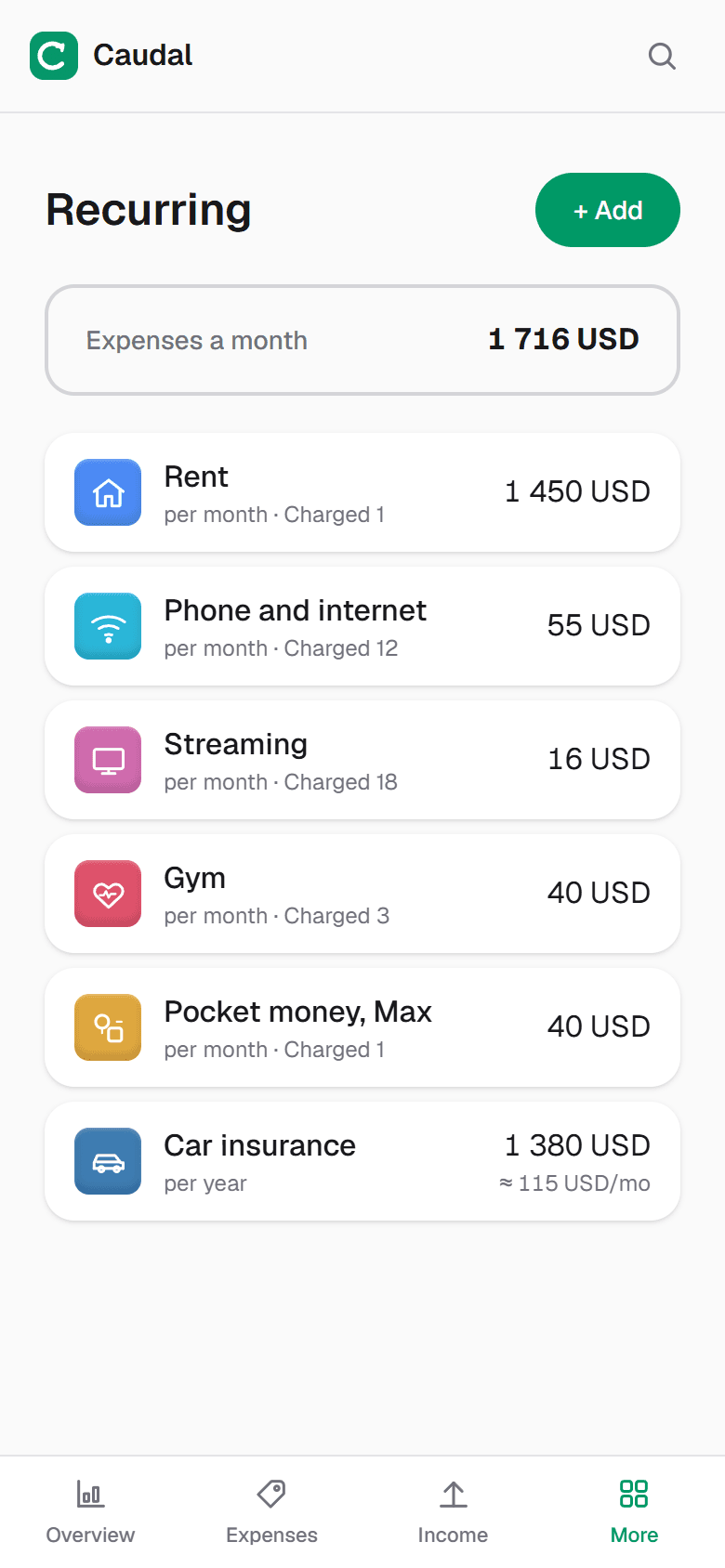
In Caudal you set up electricity as a recurring payment and record each bill. That lets you compare one month with the same month last year and see whether the changes worked, just like your other fixed costs: fixed and variable expenses.
Common questions
- What uses the most electricity in a house?
- Heating and air conditioning, then the electric water heater, the dryer and older refrigerators. LED lighting and chargers use little by comparison.
- Does unplugging appliances save money?
- Yes, a little per device. Electronics on standby draw power all day, so unplugging consoles, set-top boxes and chargers adds up to a small but steady saving.
- What temperature should I set my thermostat to save money?
- Around 78°F in summer and 68°F in winter while you are home, with bigger setbacks when you are away or asleep.
Try it on your own money
Caudal is an expense tracker in Spanish, English and Russian. Several currencies, goals, debts, a shared household budget. Recording an expense takes three seconds.
Start free