Fixed and variable expenses: what they are, with examples
Some costs arrive the same every month; others are different every time. That difference decides where you can actually save.
In short
Fixed expenses repeat every month at almost the same amount: rent, mortgage, loans, phone, subscriptions, insurance. Variable expenses change month to month: groceries, eating out, rides, clothes, entertainment. Fixed costs are worked out once and taken off income at the start of the month; variable ones are managed during it. Cutting a fixed cost once saves money every month, so that is where to start.
Splitting costs into fixed and variable comes from company accounting, but it works the same at home: it shows what part of your money leaves on its own and what part you steer every day.
Examples
Fixed
Rent, mortgage, loans
Amount and date known in advance
Fixed
Phone, internet, subscriptions, insurance
Charged automatically
Variable
Groceries, household supplies
Needed, but the amount flexes
Variable
Eating out, rides, clothes, entertainment
Depend most on your choices
Some sit in between: utilities arrive every month but the amount changes with the season. It helps to treat them as fixed at the yearly average.
Why it matters
Fixed costs are promises you have already made. They come off your income on payday, and what is left is the real money for the month. If fixed costs take more than half your income, any surprise breaks the budget: the flexible part is too small.
Where to start saving
A variable cost has to be cut again every day: no coffee out today, tomorrow, the day after. A fixed cost is cut once — a cheaper plan, a cancelled subscription, a reviewed insurance policy — and the saving repeats every month without effort.
- List every fixed payment with its amount.
- Mark the ones you can lower or cancel.
- Only then turn to the variable ones.
How much really goes on subscriptions surprises almost everyone: how much you spend on subscriptions.
How to plan the variable ones
Variable costs are not planned purchase by purchase but with a limit per category: so much for groceries, so much for eating out. What remains after fixed costs and savings gives a daily amount, and that is what you hold to. More in how much can I spend today.
How it looks in the app
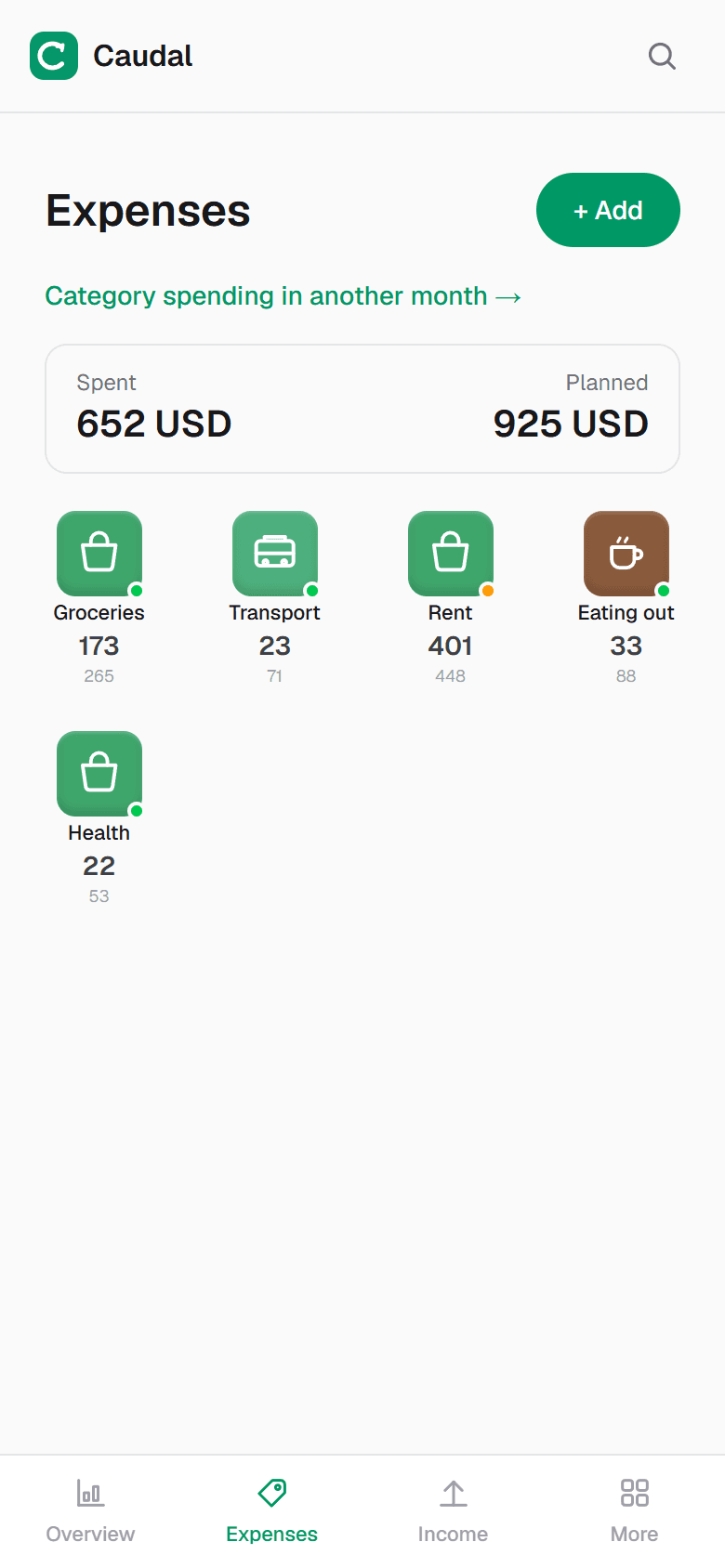
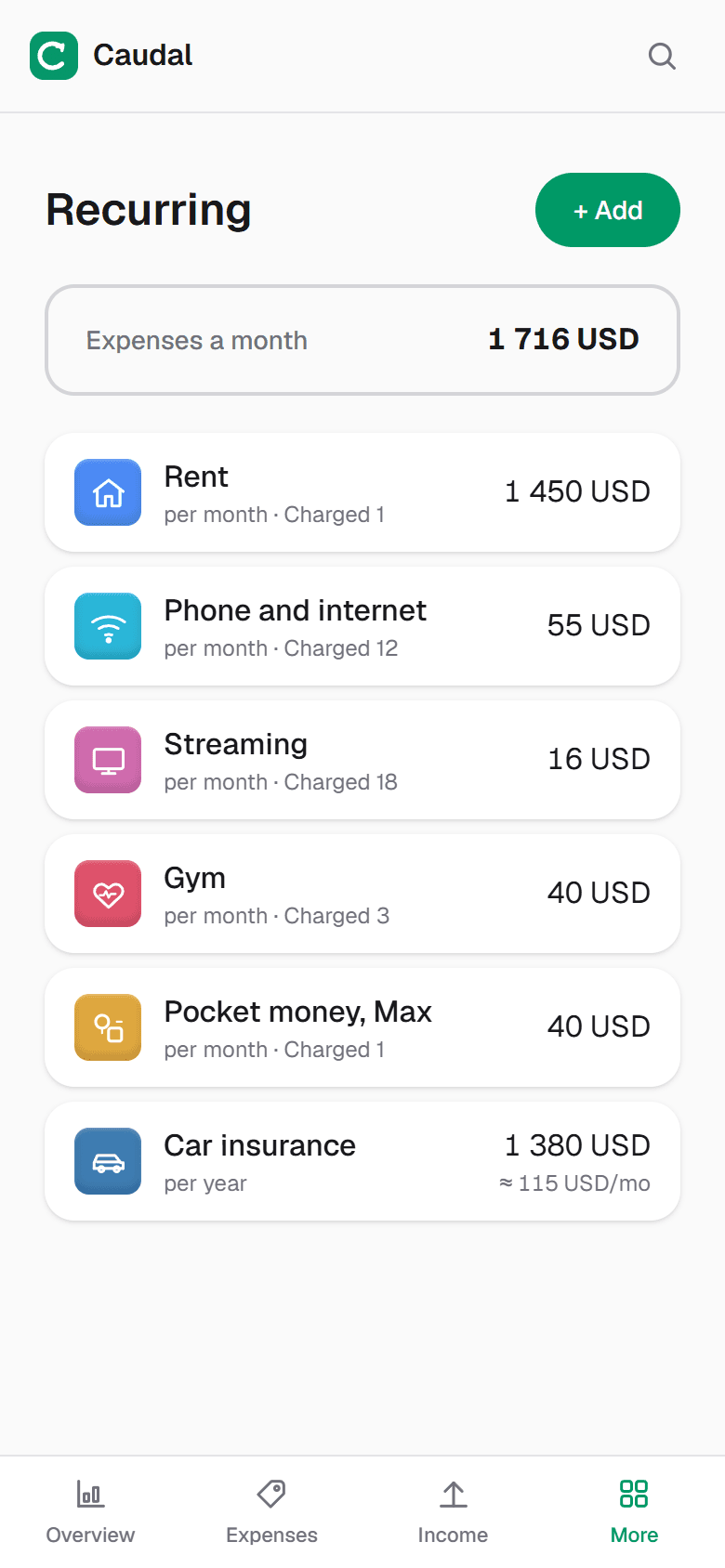
In Caudal fixed payments go under «Recurring» with the amount and charge day: once a month the app offers to record them with one button, and the forecast on the main screen already allows for them. Categories can be marked essential or non-essential, so reports show what share of your spending is flexible and how much you could save there. Variable categories get a monthly limit, and the app warns you as it runs out.
Common questions
- Are utilities a fixed or a variable expense?
- In between: the bill arrives every month, but the amount changes with the season. In a budget it is easiest to treat them as fixed at the yearly average and cover the expensive months from a small buffer.
- What share of fixed expenses is normal?
- There is no universal figure, but if fixed payments take more than half your income the budget becomes fragile: little is left for groceries, surprises and saving. The 50/30/20 rule suggests about half for needs.
- Where is it easier to save, fixed or variable costs?
- On fixed costs: the cut is made once and works every month. Variable costs have to be held back daily, so they work better with a category limit than with outright bans.
Try it on your own money
Caudal is an expense tracker in Spanish, English and Russian. Several currencies, goals, debts, a shared household budget. Recording an expense takes three seconds.
Start free