Personal finance books worth reading first
Books about money do not make you richer. What you start doing after them does.
In short
Start with «The Richest Man in Babylon» by George S. Clason on the habit of saving, «The Psychology of Money» by Morgan Housel on behaviour, «The Millionaire Next Door» by Thomas Stanley and William Danko on how wealthy people actually live, and «Rich Dad Poor Dad» by Robert Kiyosaki on assets and liabilities, with reservations. For investing, «The Intelligent Investor» by Benjamin Graham. Reading works if each book changes one habit.
There are thousands of personal finance books, and most retell the same three ideas: spend less than you earn, save first, avoid expensive debt. Below are the ones that do it better than the rest, and what to take from each.
Five books to start with
«The Richest Man in Babylon»
George S. Clason, 1926
Keep a tenth, pay yourself first
«The Psychology of Money»
Morgan Housel, 2020
Behaviour matters more than knowledge
«The Millionaire Next Door»
Thomas Stanley and William Danko, 1996
Wealth is what you do not spend
«Rich Dad Poor Dad»
Robert Kiyosaki, 1997
Assets and liabilities, with caveats
«The Intelligent Investor»
Benjamin Graham, 1949
The classic of careful investing
What each one teaches
«The Richest Man in Babylon» — parables about part of every income being yours to keep, set aside first. The shortest and most practical text on the list.
«The Psychology of Money» — why clever people make poor money decisions: envy, fear, childhood habits. It teaches patience rather than formulas.
«The Millionaire Next Door» — research into genuinely wealthy people in the United States. Many live modestly, drive old cars and do not look rich. The core idea: a high income and wealth are different things.
«Rich Dad Poor Dad» — the best-selling and most disputed. Useful for the idea that an expensive car and a big house on credit are not assets but costs. It is criticised for loose advice on investing and property, so read it as motivation rather than instructions.
«The Intelligent Investor» — for those who already save and wonder where to invest. Demanding, but it explains the difference between investing and speculating better than any article.
How to read so it pays off
- One book, one habit. When you finish, pick one action and start it that week.
- Budget first, investing later. Investing books are no use while there is no emergency fund and there is expensive debt.
- Skip what is not for you. Advice written for the US market does not always work where you live.
Where to start in practice, if a book feels like too much for now: how to make a personal budget.
How it looks in the app
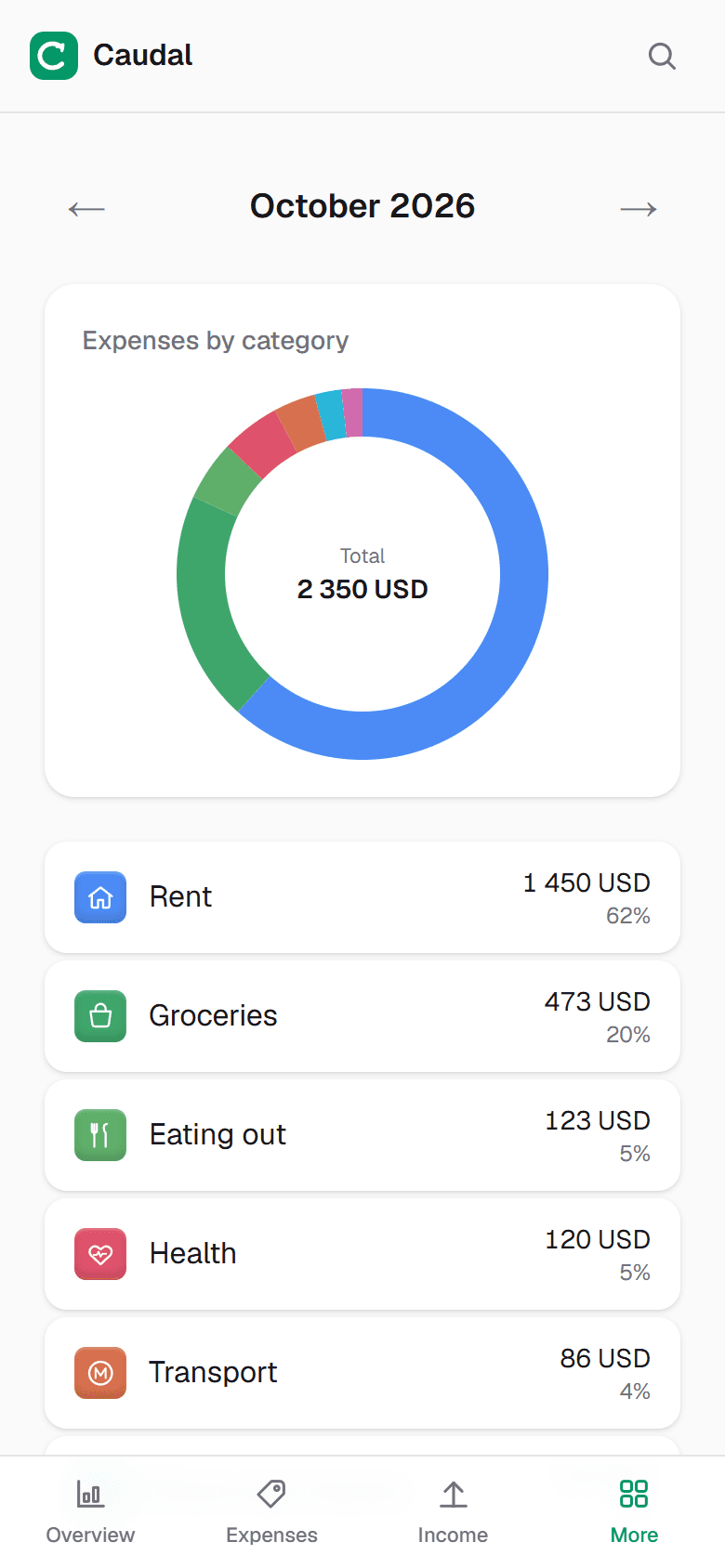
Nearly all of these books begin with the same advice: know where the money goes. In Caudal that is the Expenses screen and the monthly reports, and «pay yourself first» is a goal contribution on payday: the app works out how much to set aside each month and takes it off what you can spend today. How to organise payday around that rule: what to do on payday.
Common questions
- Which money book should I read first?
- «The Richest Man in Babylon» by George S. Clason: short, clear and boiled down to one habit — set aside part of every income first. Then «The Psychology of Money» by Morgan Housel, about the behaviour that matters more than knowledge.
- Is «Rich Dad Poor Dad» worth reading?
- As motivation, yes: it explains well why expensive purchases on credit do not make you richer. As an investing manual, with care: it is often criticised for vague and risky advice.
- What should I read about investing?
- The classic is «The Intelligent Investor» by Benjamin Graham. But it is worth starting to invest only once you have a budget, an emergency fund and no expensive debt.
Try it on your own money
Caudal is an expense tracker in Spanish, English and Russian. Several currencies, goals, debts, a shared household budget. Recording an expense takes three seconds.
Start free