No-spend challenge: rules for a month and what it gives
A no-spend month is not a fast. It is a month when you spend only on what you allowed in advance.
In short
A no-spend challenge means dropping every non-essential purchase for thirty days: eating out, delivery, clothes, paid entertainment. Essentials — housing, groceries from a list, transport, phone, medicine — are allowed. Write the rules down first, move what you save to a goal straight away, and at the end look at what was easy to live without: that is the main result.
The no-spend challenge is popular because it works fast: in thirty days you see how much money went on habit rather than need. But it only works if the rules are clear in advance.
What is allowed and what is not
Allowed
Housing, utilities, phone
Essential payments
Allowed
Groceries from a list
Not ready meals
Allowed
Transport, medicine, toiletries
No upgrades
Off limits
Eating out, delivery, takeaway coffee
The most common leak
Off limits
Clothes, gadgets, decor
Unless something breaks
Off limits
Paid entertainment, new subscriptions
Free things are fine
Everyone sets their own rules: if you work from cafés, keep them with a limit. What matters is writing the rules down before you start and not changing them midway.
How to prepare
- Pick a month without holidays, birthdays or trips.
- Write the rules down and put them somewhere visible.
- Unsubscribe from shop emails and delete saved cards from apps.
- Shop for groceries from a list a week ahead.
- Tell the people close to you — it makes turning down a dinner out easier.
What to do with the money
Move what you save to a goal on the day you skip a purchase, or at the end of each week. Otherwise it stays on the card and quietly dissolves into next month. A good goal is the emergency fund or a debt: save or pay off debt first.
If you slip
One slip is no reason to quit. Write down what you bought and why, and carry on. The reason often matters more than the amount: boredom, tiredness, advertising — that is what you will be working on after the challenge too.
What stays afterwards
The aim is not thirty days of austerity but a list: what was easy to live without, and what was hard. The first need not come back; the second can return with a limit. How not to slide back into impulse purchases: impulse buying.
How it looks in the app
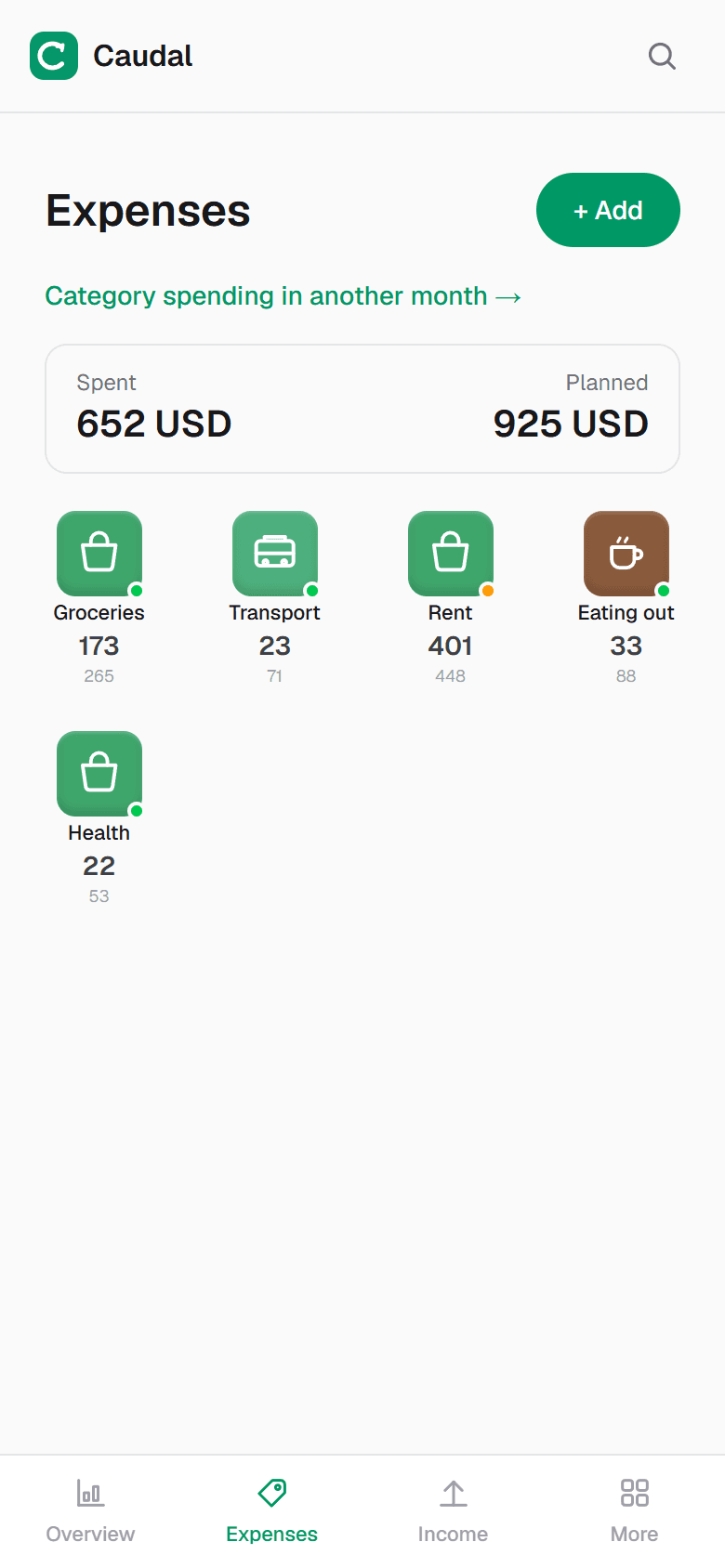
In Caudal non-essential categories — eating out, clothes, fun — can get a minimal limit for the month, and the app warns you as it runs out. What you save goes to a goal with the contribute button, and you watch it get closer. And the month's report, compared with the previous one, shows how much really went on the things you lived without for thirty days.
Common questions
- What can you buy during a no-spend challenge?
- Essentials: housing and utilities, groceries from a list, transport, phone, medicine and toiletries. Everything non-essential is off limits — eating out, delivery, clothes, gadgets, paid entertainment. Everyone writes their exact rules before starting.
- How much can you save in a no-spend month?
- Whatever usually goes on non-essential categories: eating out, delivery, shopping, entertainment. To know in advance, look at last month's spending in those categories — that is roughly the saving.
- What if I slip during the challenge?
- Record the purchase and the reason, and carry on. One slip does not cancel the month, and the reason — boredom, tiredness, advertising — tells you what to change in your habits afterwards.
Try it on your own money
Caudal is an expense tracker in Spanish, English and Russian. Several currencies, goals, debts, a shared household budget. Recording an expense takes three seconds.
Start free