Can't pay your loans? What to do, step by step
The most expensive thing here is not the debt but the silence. The first two weeks decide more than the next two years.
In short
If you cannot pay your loans, contact the lender before you miss a payment and ask for a hardship plan, a modified payment or a short deferral — it costs less than late fees and a damaged credit record. List every debt with its payment and rate, cut spending to essentials, and pay housing, food and secured debts first. Do not take a new loan to pay an old one: it moves the problem a month and makes it bigger.
Being unable to pay almost always starts before the due date: income dropped, costs rose, there are more loans than fit in the paycheck. The sooner you admit it, the more options remain.
Step 1. Do not miss a payment in silence
Lenders negotiate more readily with someone who comes to them before a missed payment than with someone they have to chase. After a missed payment come late fees, a mark on your credit record and, within months, the debt may go to collections. Call or write to the lender, explain what happened and from which month you expect to be able to pay.
Step 2. A list of every debt
Who
Bank, store card, friends
All of them, instalments included
Balance
What is left
Not what you borrowed
Payment
Monthly and due date
What is most urgent
Rate and fees
What being late costs
What is dearest to skip
Without the list, decisions follow whoever calls loudest rather than whatever costs most.
Step 3. What to pay first
- Housing, food, utilities, getting to work — without them there is no income either.
- Secured debts: mortgage, car loan. Falling behind here can cost you the asset.
- Debts with the highest fees and rates.
- The rest: at least the minimum, or an agreed amount.
What you can ask the lender for
- A modified payment — a smaller payment over a longer term. You pay more overall, but the payment becomes possible.
- A deferral or forbearance — a few months without payments. Interest usually keeps running.
- Refinancing — a new loan at a lower rate, if your credit record is still clean. More in is refinancing worth it.
Terms and programme names vary by country and lender. Always ask for the agreement in writing.
What not to do
- Do not take a payday loan to make a loan payment: next month both are due.
- Do not dodge calls: the debt does not go away and fees keep growing.
- Do not hand your last money to a lender if it leaves nothing for food and getting to work.
If there is simply too much debt
When the payments do not fit your income even after cutting spending and negotiating, most countries have a personal insolvency or bankruptcy procedure. It is a last resort with consequences that last years, and worth taking legal advice before. How much debt is already dangerous: debt-to-income ratio.
How it looks in the app
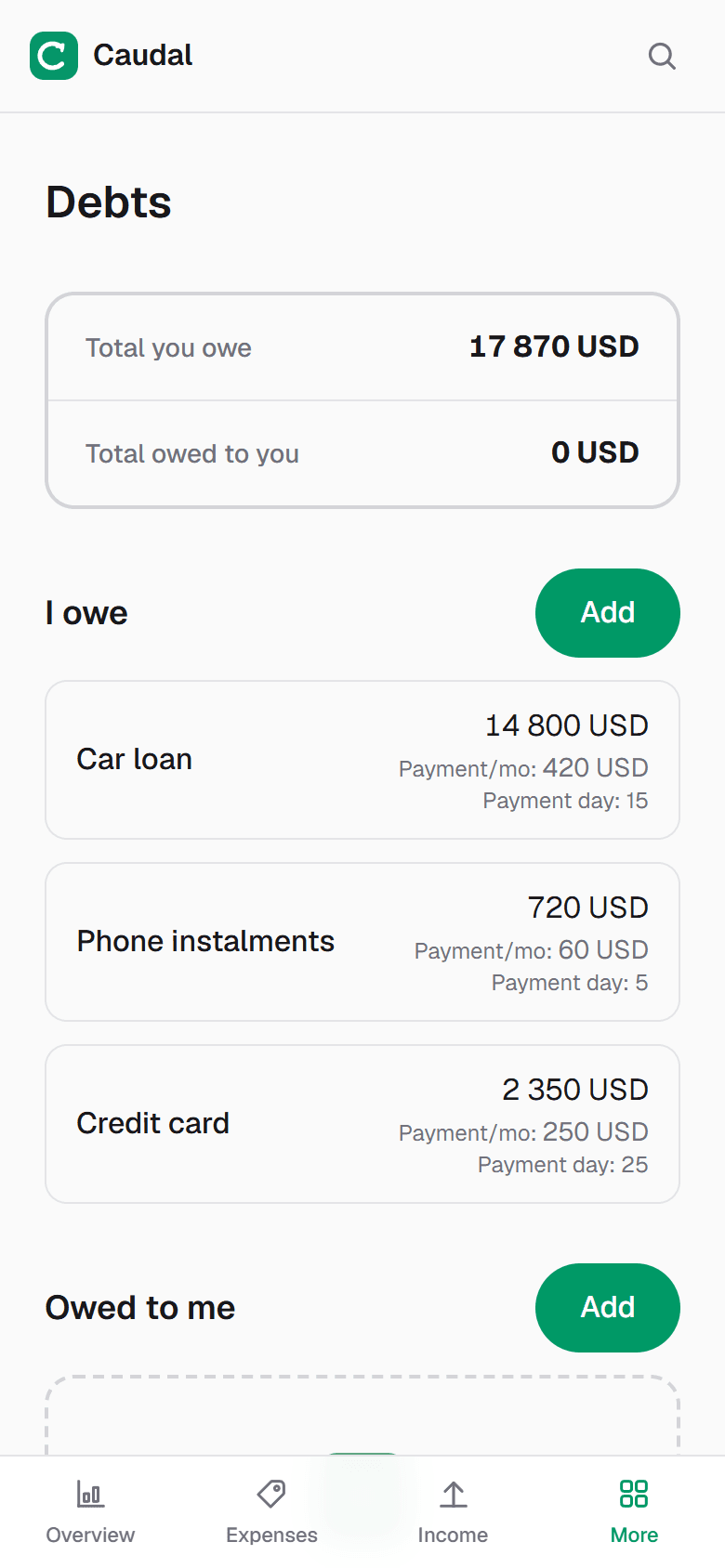
In Caudal every loan, instalment plan and credit line goes under «Debts» with its balance, monthly payment and day of the month. The app adds the payments up and shows them in the forecast of how long your money lasts on the main screen, reminds you three days before each due date, and every payment is recorded with «Make a payment» — the balance updates itself. If the lender agreed to a lower payment, change it on the debt and the forecast picks it up at once. The full plan for getting clear: how to get out of debt.
Common questions
- What happens if I stop paying a loan?
- First come late fees and penalty interest, then a mark on your credit report, calls from the lender and, within months, collections or court. Meanwhile the debt grows. That is why it pays to negotiate before the first missed payment.
- Can the lender lower my monthly payment?
- Often, yes — through a hardship plan or loan modification that extends the term and lowers the payment. Lenders agree more readily when there is a reason, such as job loss, illness or lower income, and when you approach them first. You usually pay more overall.
- Which debts should I pay first?
- Housing, food and getting to work first; then secured debts such as a mortgage or car loan; then the debts with the highest fees. On the rest, the minimum payment or an arrangement with the lender.
Try it on your own money
Caudal is an expense tracker in Spanish, English and Russian. Several currencies, goals, debts, a shared household budget. Recording an expense takes three seconds.
Start free