The 70/20/10 rule: how to split your income
Three numbers instead of a forty-row spreadsheet. It works if you do not try to cram everything into it.
In short
The 70/20/10 rule splits take-home pay into three parts: 70 percent for living (housing, food, transport, fun), 20 for saving and investing, and 10 for paying down debt or, if there is none, for giving. On 4 000 that is 2 800, 800 and 400. It differs from 50/30/20 by not splitting spending into needs and wants, but giving debt a share of its own.
Percentage rules are not about precision; they are about making the decision once instead of every day. 70/20/10 is one of the simplest.
How income is split
70%
Living
Housing, food, transport, phone, fun
20%
Saving
Emergency fund, goals, investing
10%
Debt or giving
Extra payments, then donations
Example
Take-home pay of 4 000 a month.
- 2 800 — all the month's spending, from rent to cinema.
- 800 — transferred to savings on payday.
- 400 — on top of the required loan payment, to finish it sooner.
Once the debt is gone, the ten percent can join savings — making it 70/30 — or go to helping family and to charity.
How it differs from 50/30/20
In the 50/30/20 rule spending is split into needs (50) and wants (30), and the 20 covers saving and debt together. In 70/20/10 all spending is one bucket, but debt has its own share. It suits people who find it hard to sort «need» from «want», and people with a debt they want gone sooner.
When it does not fit
- Housing takes more than half your income. Then seventy percent is not enough, and the rule has to shift for a while, to 80/15/5 for example.
- Expensive debt. If the credit card rate is high, ten percent is too little: for a while send part of the savings to the debt too, keeping only the emergency fund. More in save or pay off debt first.
- Irregular income. Work the percentages from your lowest month and send anything extra to savings.
How to start
- Work out your real take-home pay.
- Move 20 percent to savings on payday.
- Put 10 percent towards the debt, or set it aside for giving.
- Live on the rest — and after a month, check whether it was enough.
How it looks in the app
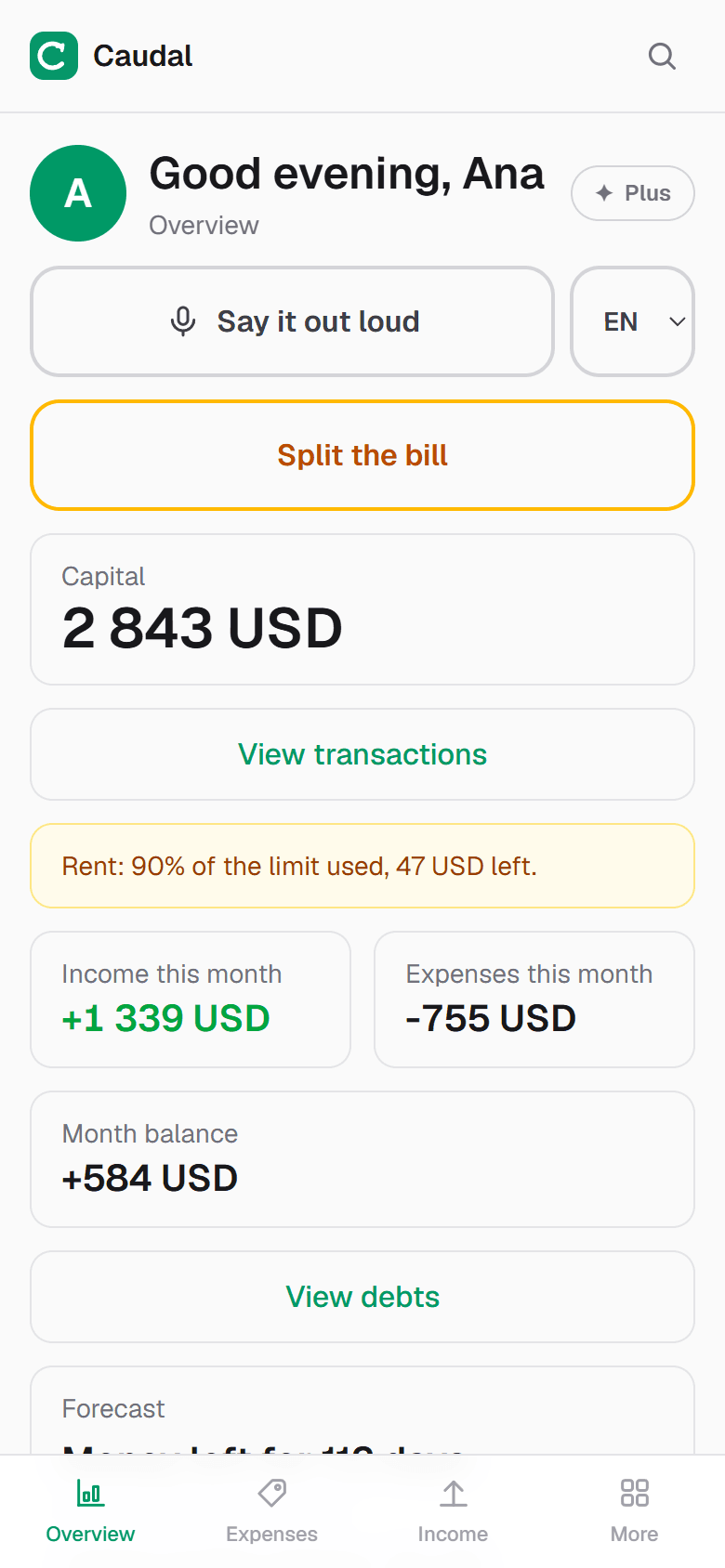
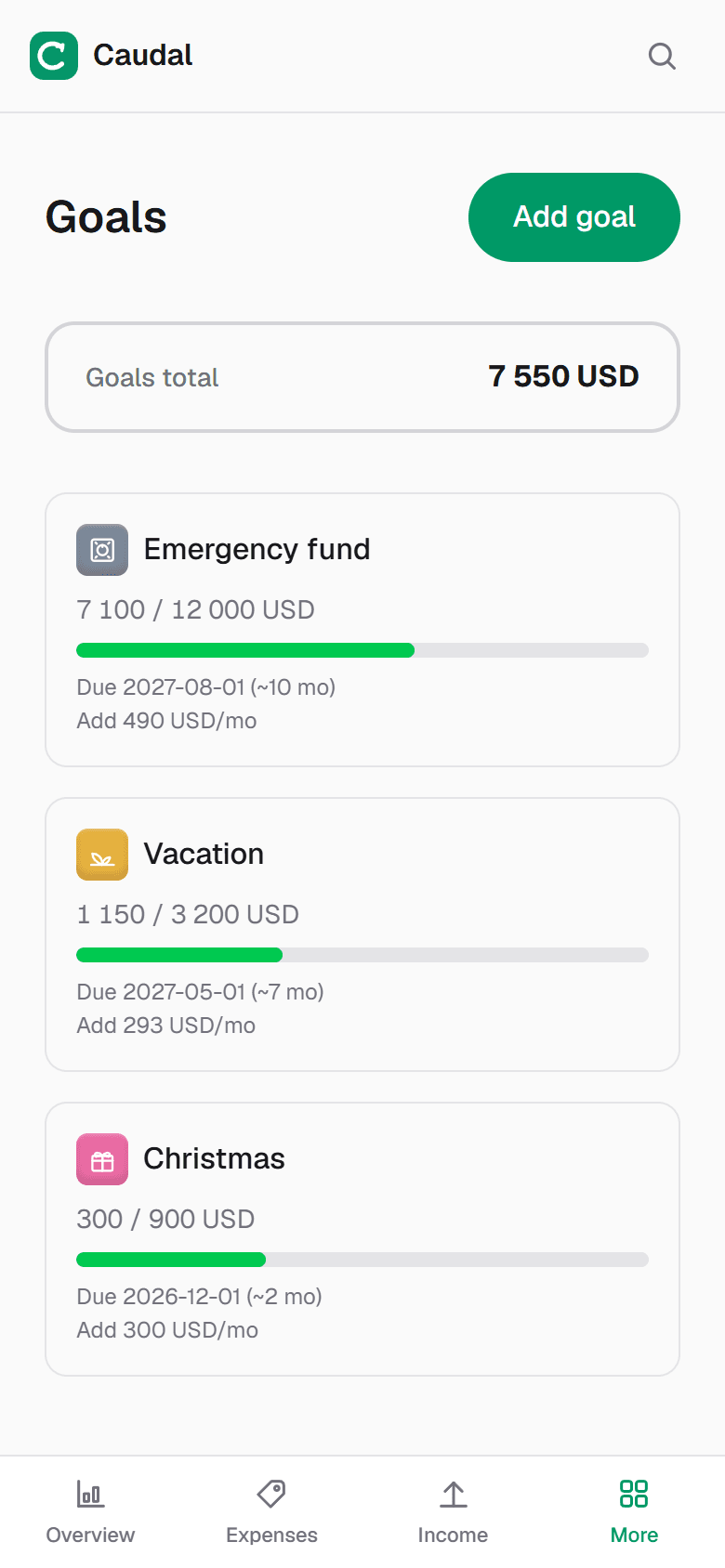
In Caudal the twenty percent is your goal contributions: the app works out how much to set aside for each goal per month and takes it off what you can spend today. Debts with a monthly payment go under «Debts», and an extra payment of any size is recorded with «Make a payment» — the balance updates itself. The main screen is left with one number: how much of the seventy percent you can spend today.
Common questions
- Which is better, 70/20/10 or 50/30/20?
- 50/30/20 is handier if you want to see how much goes on wants. 70/20/10 suits you if sorting needs from wants is hard and you have a debt that deserves its own share. In essence both ask you to save about twenty percent.
- What do I do with the ten percent if I have no debt?
- Add it to savings — making it 70/30 — or give it to family and charity, as the original version of the rule intends.
- What amount are the percentages based on?
- Take-home pay, the money that reaches your account. If your income varies, base it on the lowest month and send whatever comes in above that to savings.
Try it on your own money
Caudal is an expense tracker in Spanish, English and Russian. Several currencies, goals, debts, a shared household budget. Recording an expense takes three seconds.
Start free